 Somewhere in 2010 it came to my attention that we had a regular attendee, John, who had been arrested for sexually assaulting a minor. We as Christians are supposed to be forgiving and the Bible gives us plenty of verses about the joy of a repentance sinner. Luke 15:7 is a great example, “I say to you that likewise there will be more joy in heaven over one sinner who repents than over ninety-nine just persons who need no repentance.” But Christ said in Matthew 10:16 “Behold, I send you out as sheep in the midst of wolves. Therefore be wise as serpents and harmless as doves.” God had a plan for John and my paths to cross so I could teach you about this issue.
The first thing John did when came to us was groom the church. He made his presence known with most the staff and leaders. John charmed the lead pastor by relaying he was an upstanding citizen, had just moved into town and was looking for a Spirit lead church. He told the pastor after listening to the music and his powerful sermons he was so moved and decided this was going to be his new home church. John had also found a single mother, Betty* who had an eleven-year-old daughter, Lisa*, and he turned his charm toward Betty after winning over the church. It wasn’t even a month later that John had Betty fooled that he had changed his ways and she had nothing to worry about. He had fooled the gatekeeper and the church, so he turned his attention to Lisa. Lisa was one of Jessica, my oldest daughters, best friends. Lisa had stayed over at our house on so many occasions that we started calling her our third daughter. On Wednesday night Jessica and Lisa would go to Youth Church together. Wendy and I would drop them off and Betty would pick them up. One night Jessica told me that Betty had brought her new boyfriend, John, to pick the girls up and something about John made her feel uneasy. She couldn’t quite explain it but there was something in the way he treated Lisa that just didn’t seem right. Then we started hearing stories of how John was acting around Lisa, and alarm bells started going off. Lisa told Jessica the reason she liked John so much was he paid so much attention to her that he helped her with her homework. Sounds innocent, but Lisa liked to lay on the floor while doing her homework and John would lay next to her, tickling and roughhousing with her. Another thing, he was always buying her popsicles and loved to watch her eat them. If you have never taken a class on sexual predators, these are classic signs of grooming. Then another parent of one of Jessica’s friends pulled me aside and told me that John was a registered sex offender. Several members of the church became concerned over John’s past and behavior. It was brought to the attention of the church’s leadership, so the church requested a copy of John’s arrest report. When we reviewed the report we realized this was worse than we had thought. The report said John’s ex-wife found out that he had been molesting her daughters and later during the investigation found out John had also molested her sons. For some reason unknown to us, because of the seriousness of the crime, the court only listed John as an offender and not a predator. During this time we also found out that John had remarried, and his now wife had him removed from their home because she was afraid that John had been grooming her children. Because of what we were seeing, we felt Lisa was going to be his next victim. I told the leadership of the church that they should talk to him about his past and question his intentions with Betty and Lisa. If the church did not feel comfortable with the conversation, we would discuss our next step. Yet when we sat down with the lead pastor, he felt it was a bad idea to confront John with his past. Maybe we were the ones that could turn John around, and maybe we should get him into a men’s group and the brothers could gather around him and help him see the error of his ways. The pastor went down a whole list of concessions we were going to do to keep John in our church so “we” could change him and bring him back into the flock. I could see the pastor getting really excited about the opportunity to bring someone like John around. I told the pastor that I would do what he wanted me to do, but in my experience in law enforcement, most men like John do not change. Besides standing on the outside and looking at what was going on, I could see that John had already won the pastor over and had picked his next victim. The pastor told me to keep an eye on John and if I saw anything else, bring it to his attention and he would decide what to do next. Reminding him of an old Star Trek saying, “logic clearly dictates that the needs of the many outweigh the needs of the few, or the one.” The pastor agreed with my logic and decided to give John a call and talk to him about his past and his relationship with Betty and Lisa. When the pastor called John and explained to him that his past had been brought to the pastors attention by other members of the church, John showed his true colors. He cursed out the pastor and told him he would never come back to our church again. Apparently this was not the church of redemption he thought it was. John never came back to the church, but I found out later he went to another church and started grooming another little girl before being run off from that church. John is now serving life in the penitentiary because he couldn’t change his ways. Every church I have attended in these past nine years has stories like this. Pastors just do not want to give up on anyone and that someone becomes a cancer that hurts the church. Pastors need to understand that we lean on them to lead the church and teach us about the Gospel. Yet sometimes we have to remind them that no matter how hard they try to change a harden heart, it is the Holy Spirit that convicts and transforms the hearts. Our pastor has pulled me to the side on many occasion to tell me he wants me to work with someone because of my walk with the Lord. I never tell him no. Using the gifts God has given me, it normally takes about two minutes of talking to this person and I can see they will not give up the sin that they love. It is not that we don’t try yet after a period of time most always show their true colors and leave the church. They want to check the box of attending a church because they are afraid God on judgment day might look at them and say, “I knew you not”. In our training “Your Safety Has Become Your Responsibility” we dive into Gavin De Becker’s book, “The Gift of Fear.” De Becker breaks it down that during most conversations, when a person is being deceptive there will be red flags you can pick up on. De Becker explains we need to listen to what our intuition says. De Becker says “intuition is always right in at least two important ways: 1. It is always in response to something. 2. It always has your best interest at heart.” We have something more powerful than our intuition; we have the Holy Spirit so those two things De Becker talks about are supercharged to protect us at all times. As quoted, all through the Bible there are verses about the joy of a repentance sinner like Luke 15:7. To me, there is no greater joy than seeing someone repent, experience God’s grace and join the flock. We rejoice as they go on to live the life that God has planned for them. Yet we must understand there are times we try and try to help someone understand the error of their ways only to see them become a cancer in the church and do more harm than good. So pastors when your safety team members bring someone to your attention that appears to be a disruption to the church, listen to them. Remember your job is to lead and teach, ours is to protect the flock. *Betty and Lisa’s names were changed to protect their privacy. You can find John Polgar’s information on FDLE Department of Corrections website.
0 Comments
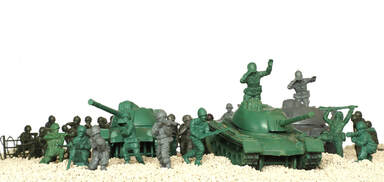 The other day, Wendy received an email from an attendee of one of our training courses. The header of the email issued a dire warning to church security teams. “Congress to Outlaw Church Security Teams.” Usually, I look at titles like this as clickbait. In this divided country I can pull up all sorts of occurrences where main-stream media and the government speak of not being a friend of Christianity, and this one seemed a little farfetched. If you would have said “New York Senate wants to band weapons in church” I would have just said, “that’s so New York.” But to see that congress was getting into the church security business didn’t really add up, so I went and looked at the bill this video was talking about.
The bill is S.3589 - Preventing Private Paramilitary Activity Act of 2024. When did church safety teams become a Private Paramilitary organization? I have been all over this country teaching churches how to set up “safety teams” and not one time have I heard anyone call themselves a private paramilitary group for the church. I know that is not what we teach and there has never been a wink-wink, nod-nod from some of the safety team members that would lead me to believe they were anything of the sort. Who was this organization that produced a nine-and one-half minute video calling church safety teams, paramilitary units. I went to their website and wasn’t surprised. Their description starts with “If you love guns and you love Jesus, you're in the right place.” So, I went out and read the bill. First, I don’t think it will pass congress and most states already have a bill like this. Florida has one, “Paramilitary training; teaching or participation prohibited, Florida State Code 790.29.” Just as FSC 790.29 and S.3589 state they don’t want people running around out here forming paramilitary groups that train with the idea of causing civil disobedience. While reading S.3589, I could not find any reference to churches, religious organizations, or anything to the effect of a church security team. So now I have to go out and watch the nine-and one-half minute video where this company has now put the fear of God (no pun intended) into members of the church that if this bill is passed and you have a security team the government is going to come and knock on their doors. So two minutes into the video I realized this was nothing more than clickbait and also a person that was wanting to create havoc between the church and our government. There is nothing in this bill that has to do with churches and their church security teams. First the creator of this video states that the “Paramilitary Act” “that wants to establish a federal prohibition on paramilitary groups. It targets activities that intimidate state and local officials, interfere with government proceeding, impersonate law enforcement, and violate individuals’ constitutional rights.” How is this connected to church security teams? Then the creator weakly uses one of the definitions of the bill “(9) PRIVATE PARAMILITARY ORGANIZATION. —The term ‘private paramilitary organization’ means any group of 3 or more persons associating under a command structure for the purpose of functioning in public or training to function in public as a combat, combat support, law enforcement, or security services unit.” and he claims the last part “security services unit.”, is the definition of a church security team. Let’s break this down. Church security, unless paid, is mostly all voluntary. Church security teams may have volunteers that are law enforcement, but it still does make the rest of the team police officers. In most states a security guard has to have a license from his or her state that says such, but usually when they volunteer at a church that license might not mean anything at all as far as their jurisdiction or powers. I tell all volunteer church security teams (and we call them safety teams), you are not the police, you are not military, and you are not a security guard, so going back to the video, all this speaker is doing is trying to create disorder. Another thing that concerns me, when talking to church leadership and their anxiety of safety teams because of liability issues, let your pastor read this bill and explain to him the safety team is now a paramilitary group. He may pull the plug on your safety team. As a church safety team member, we are ambassadors for Christ. Our number one obligation is to “Go and make disciples.” Matthew 28:18-20, not be a paramilitary group. We as church safety team members need to be the watchmen on the walls that know everyone in our congregation and when someone new comes in, be a part of the first connection to find out if the person entering your church has come to worship, is hurting and needs help or could be that wolf in sheep’s clothing. From there you take the appropriate action. The video sent to me is full of liability issues and if you implemented one of them. I feel you would get sued. He gives the example that if someone is doing something illegal at your church you have the right to apprehend them till the police get there. Might want to check with your state laws, that might not be allowed. To finish my rant, what is starting to scare me is the amount of “church security experts” popping up all over the internet and YouTube. Please be careful who you listen to. If the presenter is more concerned on your shooting techniques than the Gospel or expanding the Kingdom of God, I pray you move away from that “expert.” There are some good trainers out there but the last thing you should be focusing on is active shooter. Can it happen, yes. We just saw it in Houston. Do we need to do training on it, yes. But if that is your main training and not on how to spot danger, witness to the hurting, de-escalate those that are angry, I feel you do not have a safety team but a paramilitary unit. I am not going to name this organization that put out this video on “Congress to Outlaw Church Security Teams,” because you can go out and do your own research and find them. This is not to bash this organization because we have a saying at Trinity Security Allies, “we have no competition, we have God.” Wendy, Jessica, and I have learned to lean on the Lord to make sure we were doing the right thing by taking on this ministry. After going on nine years I would say we are doing God’s work because He has blessed us in this journey. You have heard me before, 1 Peter 5:2-4 is my walk “Be shepherds of God’s flock that is under your care, watching over them, not because you must, but because you are willing, as God wants you to be; not pursuing dishonest gain, but eager to serve; not lording it over those entrusted to you, but being examples to the flock. And when the Chief Shepherd appears, you will receive the crown of glory that will never fade away.” Do not create chaos but be examples to the flock and watch your team grow. Be safe and be blessed. 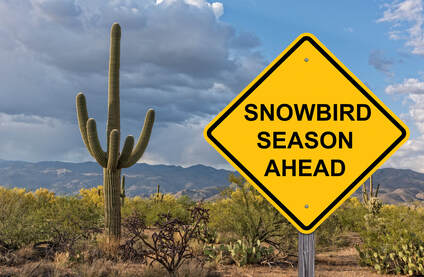 As we head into the “Snowbird” season, we as church safety team members need to understand that our assignments are going to grow in the upcoming season. For those of you that do not live in Florida, “Snowbirds” are not our migratory feathered friends but temporary residents who spend their summers in the northern part of America and their winters in Florida. Recently while talking to a church safety team member from another church, he told me that the membership of his church almost doubles when the “Snowbirds” come home. Does that mean our duties change? No. But it does mean there is more of a chance that something can happen on any given Sunday. Medical emergencies, new faces on your campus and an opportunity for more wolves to visit.
I have no proof that church issues increase when “Snowbirds” come home, and I am not insinuating that “Snowbirds” are the cause of any increase. Yet I do know a recent Family Research Council’s (FRC) study showed there has been a rise in crimes against the churches in 2023. In their findings they pointed out that acts of hostility against churches has increased three times the amount in 2023 than in the same time in 2022. Vandalisms, arsons, gun-related incidents, and bomb threats have increased with vandalism being at the top. The report points out that most vandalism appeared to have been committed by youth or persons struggling with mental illness yet some of these attacks against the churches show signs of being motivated by hate against the church itself. If that is not enough, the Jewish Telegraphic Agency reported in September, 2023 that “At least 49 synagogues have been evacuated due to bomb threats in the last 2 months.” Understand that this is not around the world, this is in the United States. The Anti-Defamation League expects these threats to continue because of High Holidays beginning soon. In addition, the U.S. Surgeon General’s Advisory on the Healing Effects of Social Connection and Community, produced a study “Our Epidemic of Loneliness and Isolation.” They reported that loneliness is a public health threat as severe as smoking and obesity. It went on to state, “Belonging – A fundamental human need—the feeling of deep connection with social groups, physical places, and individual and collective experiences.” Responding to the epidemic of loneliness and isolation, psychiatrist Daniel Amen is concerned that social media is so addicting, and loneliness and isolation is only going to get worse. Yet, Doctor Amen had a great answer to this problem. He told CBN news “So, it’s back to church,” he said. “Go back to church. Get involved. Get involved with groups. We have to go back. And really, no better place to solve it than the church.” Amen, Doctor Amen. We in Florida look forward to when the “Snowbirds” come south. It is a time of reunion with all our friends who go back and forth. It is a time to catch up, worship and break bread together. Kind of sounds like when we all go to be with the Father in Heaven. Yet during this time of fellowship, we know that possible threats are still out there and we as Safety Team Members must always be alert to those that come to our churches. During this time we should be looking to invite those that are looking for answers to unanswered questions and those in search of a winter home church. This is where Safety Team members should shine. Sharing the Gospel to those that will listen and keeping the wolves at the gates. Be safe and be blessed.  In Gavin de Becker’s book “The Gift of Fear,” he talks about protective/restraining orders. Here in Florida we call it an “injunction for protection.” He also calls it a factor in the most predictable crime, spousal homicide. Without going into much detail, de Becker talks about the mental aspect the receiver of the injunction (subject) goes through which could put the person getting the injunction (complainant) in grave danger, possibly even more danger than when they were living in the abusive relationship. This is not to say that we are against an abused spouse getting an injunction, it is just saying that when a member of your church produces an injunction against someone in your church, you need to pay special attention to the situation.
We at Generations Christian Church recently had a situation where the subject showed up on property. Trying to take the Christian attitude and reason with the subject, they were advised of the injunction and if they didn’t leave the church, we would contact local law enforcement. While leaving the property the subject located the complainant and proceeded to physically attack the complainant. Fortunately, the complainant was not seriously injured but the subject did get to the complainant before Safety Team Members were able to intervene. If you or your church ever has a subject on your property that has an outstanding injunction against them, the first thing you should do is contact and inform local law enforcement of the situation. Get them on the way to your location. Tell the subject that local law enforcement is on their way. While communicating with the subject, find the complainant and advise them of the situation and keep them away from the subject. Do not let the subject anywhere near the complainant for fear of an altercation. If at all possible video the incident for both parties’ protection. Even though we want to do the Christian thing and witness to the subject, this is not the time or place. Keep both parties apart from each other and let local law enforcement handle the situation. We were lucky, the subject only physically assaulted the complainant in our incident, the subject could have easily produced a weapon and done serious injury to the complainant. Just as de Becker called spousal homicide from injunctions as one of the most predictable crimes, we must always be on high alert during these situations, and not let what happened to us happen to you while on your watch. Be safe and be blessed.  Two years ago, one of my good friends, mentor and board member, Mark Graham told me that hat every year God lays a word on his heart and all year long he focuses on that word to bring glory to the Kingdom of God. My word for 2022 was unity. I prayed all year that God would bring unity back to this country and use me anywhere possible to make this happen. With all of the division in every walk of life, it felt this country was on a downhill spiral and would take a miracle to bring us together. It appeared around every corner someone was trying to divide us as a country, people and even religion. The hate that was being exhibited was sometimes hard to fathom or justify. A lot of my Christian friends were afraid to voice their opinion or beliefs because of fear they would be cancelled, banished on social media, or even shunned by family and friends (sounds like the Jewish followers of Christ in the New Testament). There didn’t
appear to be a safe place to go and escape the “politically correct” or “woke” mentality. I personally felt the attacks in relationship and while doing our video/podcast with Kevin Haggerty on True Christian Talk. Facebook and YouTube both threatened to kick us off their platforms. We didn’t start out wanting to add to the divide but sometimes when you speak what God has place on your heart you ruffle a few feathers. So my word for 2023 is revival. I felt this was the only way we could recover from all the turmoil that was being shown across the world. It didn’t take long for God to show me that revival was the right word for the year. On Monday night January 2, 2023, Buffalo Bills safety Damar Hamlin made a routine tackle on Cincinnati Bengals’ receiver Tee Higgins. Hamlin jumped up after the play only to take a couple of steps before collapsing back on the field. Initial review looked like maybe Hamlin had gotten the wind knocked out of him, but as more and more medical team members started gathering around Hamlin you could feel the seriousness of the situation. As we watched the medical team worked on Hamlin, we saw team members from both sides kneeling and praying for their fallen teammate, my word revival came to mind. I was watching grown men from the NFL making a statement that when one goes down, the others go to their knees and pray for the fallen. Even former Detroit Lions quarterback and ESPN analyst Dan Orlovsky said a 45 second prayer for Hamlin while live on “NFL Live”. But it didn’t take long for the nay-sayers to come at Damar Hamlin and how the country prayed for him and in return he wore a jacket that people couldn’t wait to talk about. How Hamlin was disrespectful and blasphemy because the back of the jacket bore the word ‘Eternal’ above the doll-like figure being crucified. First I thought the jacket was ugly but not disrespectful, one I wouldn’t wear. But after the criticism Hamlin responded with ‘After talking with my parents I understand how my coat could have offended some people,’ ‘It was never my intentions to hurt or disrespect anyone, the coat is abstract art to me. It says Eternal which I am Eternally thankful to my Savior!’. I am beginning to like this kid more and more. Less than a month later, the Philadelphia Eagles and Kansas City Chiefs were bound for the Super Bowl LVII. The media could not stop talking about how history was going to be made on February 12, 2023. It would be the first time in NFL history that two black quarterbacks would be starting in a Super Bowl. What wasn’t talked about as much was that both quarterbacks openly confessed that they were followers of Jesus Christ. You can find articles out there about Hurts and Mahomes being devout Christians but only a few news channels felt that it was important to report. To me, the story the mainstream media only wanted you to hear was about their skin color and not what is really important, their souls. Then on February 8 th , 2023, at Asbury University a morning chapel service went from normal to full blown worldwide, revival. It is estimated that over the next two weeks there were over 50,000 Christians, people searching for answers, and just curious onlookers made their way to Wilmore, Kentucky to see God’s hand at work. Tom McCall, a writer for Christianity Today, wrote about the Asbury Revival, 1 “As an analytic theologian, I am weary of hype and very wary of manipulation. I come from a background (in a particularly revivalist segment of the Methodist-holiness tradition) where I’ve seen efforts to manufacture “revivals” and “movements of the Spirit” that were sometimes not only hollow but also harmful. I do not want anything to do with that. And truth be told, this is nothing like that. There is no pressure or hype. There is no manipulation. There is no high-pitched emotional fervor. To the contrary, it has so far been mostly calm and serene. The mix of hope and joy and peace is indescribably strong and indeed almost palpable—a vivid and incredibly powerful sense of shalom. The ministry of the Holy Spirit is undeniably powerful but also so gentle”. Yet with what seemed to be an extraordinary movement of the Holy Spirit in the life of so many, the dividers started to come out and put their spin on whether it was a true Jesus moment. For every article that was written if it is the real thing, there are just as many saying, “maybe we should wait and see”, “there was a woman pastor” or “I have been to “revivals” like this before and it was all hype.” All I can say is if one-tenth of those that visited Asbury during this “revival” turned to Christ, repented, or made a new dedication to follow Him, it is a time for celebration. So what does this have to do with church safety. It does not matter how much Gospel you can preach, there will always be those that want to shut it down and not bask in the glory of God and the Holy Spirit’s moment. They will always be those out there, till Jesus’s comes back. So we as Safety Team Members must be on guard at all times. We must also take a stand and when we see moments like these we must be on the front lines to protect those making a difference in the lives of others or the status of the country. In Mark 9:38-41 we find the disciples come to Jesus complaining of others doing things in His name, “Teacher,” said John, “we saw someone driving out demons in your name and we told him to stop, because he was not one of us.” “Do not stop him,” Jesus said. “For no one who does a miracle in my name can in the next moment say anything bad about me, for whoever is not against us is for us. Truly I tell you, anyone who gives you a cup of water in my name because you belong to the Messiah will certainly not lose their reward.” David Guzik said “There are many that may be wrong in some aspect of their presentation or teaching, yet they still set forth Jesus in some manner. Let God deal with them.” Let us rejoice when Christ’s name is spoken in salvation. Let us help those that might not have the full picture of who Christ is and what He can do, but do not stop those that might be new in Christ but wanting to share the Word. Protect them and guild them in the proper teachings. Remember you are a watchmen and part of your job is to “Therefore go and make disciples of all nations, baptizing them in the name of the Father and of the Son and of the Holy Spirit, and teaching them to obey everything I have commanded you. And surely I am with you always, to the very end of the age.” Matthew 28:19-20. Be safe and be blessed. |

AuthorJim has many years of law enforcement experience and has run the safety team at his church for several years. TSA was formed after he realized God's calling when multiple churches reached out and asked him to present at their church. Archives
May 2024
|
 RSS Feed